
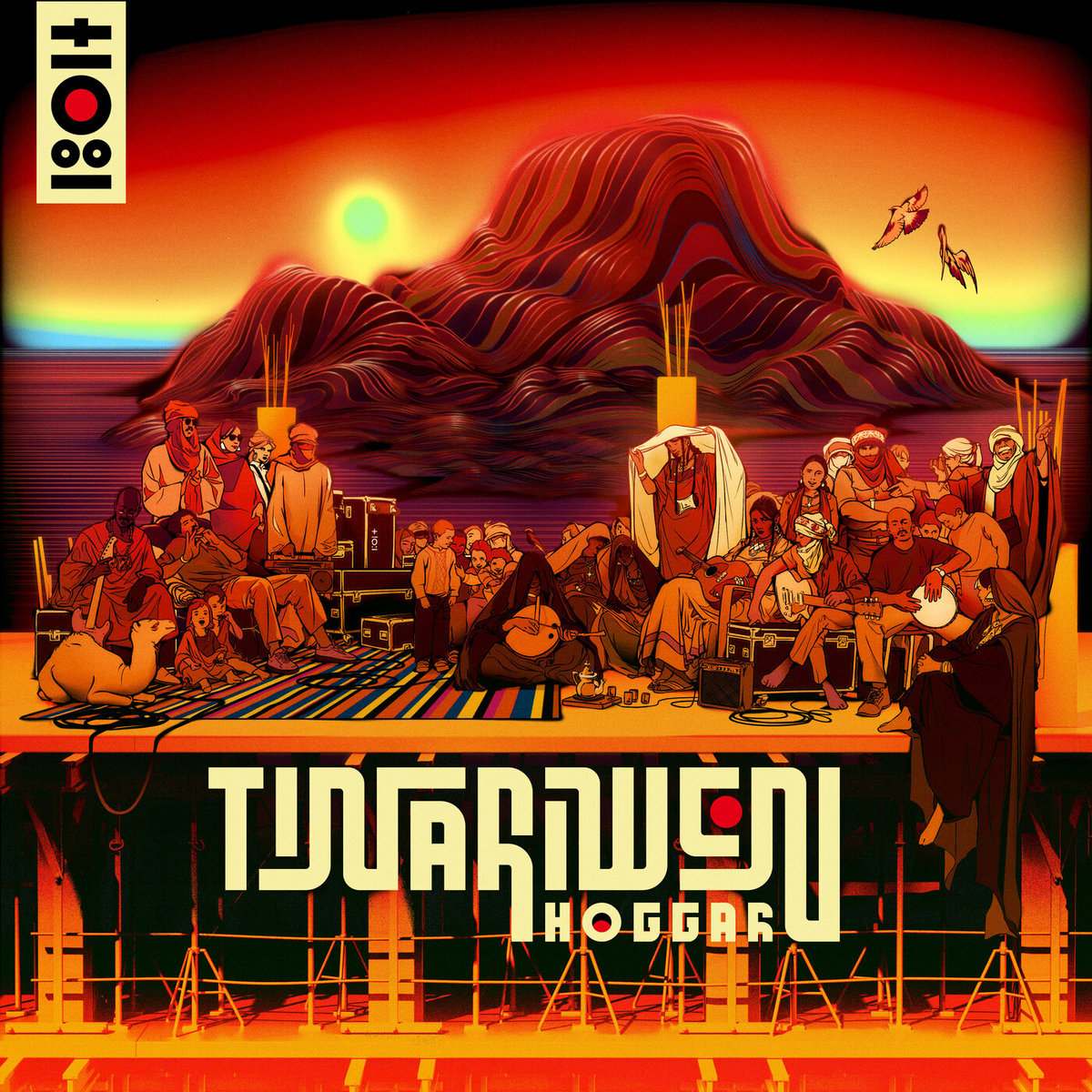
So, telling you where this musical group resides would not exude confidence in me since Tinariwen are made up of Tuareg people, which are a nomadic group from the northern Saharan-Africa region who are Islamic. I knew jack about them before writing this post. Me looking into this band, while I am unfamiliar with the religion and the region is challenging, but hearing this album for the first time has been so rewarding. The history of the Tuareg are so vast and me skimming through their Wikipedia page would not do them any justice as they have been around the North African region for at least 1500 years. With no definitive borders, they have always been on the move between countries like Mali and Niger with much conflict in between themselves, the governments, and even with Westerners. They are known as “blue people” as these people wear long blue turbans and veils. That’s the very truncated description of them, so I’ll do my best to give the band justice into their history. Tinariwen has started with a man named Ibrahim Ag Alhabib who saw his father become a casualty of war via execution around 1963. According to their bio, Ibrahim would bring together musicians to perform at events for exiled Tuareg. Their name Tinariwen, came from their most popular spoken dialect the Tamashek as “The People of the Deserts”. The band has went through many members for the years and even went up in arms under Muammar Gaddafi’s banner when he promised them refuge in exchange for fighting. Yep, that Gaddafi. So, I must disclose, I don’t know all the actions they’ve done, but later fought in the Tuareg rebellion against the government in the 90s. After that, no more fighting. As they decide to do what they do best, make music. They wouldn’t do album cycles in the early days. They would share with other members of the community not by streaming as that was not a thing back then, but with cassette tapes and pass them back and forth. They would do it for charity and they only ask for a tape to record on. Before Hoggar, they have been doing many releases since the 90s. As they finally are doing album cycles with more professional recording equipment. No more dusty tapes, as they went on to SD cards in phones, and then to streaming in our digital age. They were all in it to win it. And it has gotten to travel so far to reach to my ears under the Wedge record label. Their genre is apparently Tishoumaren, also coined as desert blues. The blues label makes sense if you hear Hoggar and its contemporaries’ sound. The guitars, especially the electric ones, are repetitive and sound dirty as if you hear some blues rock coming from the deep South of the US of A. Western influences has touched this genre and the repetition does remind me of the musical greats that come from Mali (see Na Hawa Doumbia and Oumou Sangaré as I highly recommend!), with the repetition and percussion, but Tishoumaren is not only raw in its culture embedded in their music, it can be danceable I find it to be. You also have the vocals of men and sometimes women come together on some tracks. They come in harmony, albeit not at perfect synchronization, but it doesn’t need to be. This is a celebration of what they have accomplished and what they have survived. Me not knowing a lick of their Tamashek language, they have thankfully provided a brief translation in multiple tongues on their Facebook page for Hoggar. So, I’ll be using that as a reference with many of the songs composed by Ibrahim himself. It’s well produced, but it’s also a really catchy, wholesome, and warm album, that’s sole purpose is to bring others together. Even if you don’t know the words to sing to it, Islamic or not, you can understand what emotions and prayers have been expressed within the instruments and their vocalizations. It’s spiritual. That itself makes it relatable and it astounds me that it can have the power to do that overseas.
Tuareg man standing in front of his camel in the desert, North Africa, Tamanrasset, Algeria. Photo by Eric Lafforgue via Getty Images.
In the opener, you can hear the song structure working out for them on “Amidinim Ehaf Solan” with the background supporting vocals answering the main vocalist. Fans of the blues knows that electric sound, but the vocals provide this embracing atmosphere. Embracing it is, the lyrics are tragic as they want to unite despite their home being war torn. “Imidiwan Takyadam” sounds lovely with these idiosyncratic chord progressions and its trance-like percussive elements on their guitars. It really sounds like something Michael Hedges or Andy McKee would be behind the mic for. This second song even has one of my favorite singer-song writers featured on it, being Swedish José González and his gentle lullaby-like singing in his Spanish native language. “Imidiwan” pleads with the ones fighting on how they’ve “forgotten their sisters, who they’ve left behind” and point out the consequences of their actions. It was a raw moment when even the vocalist almost lost their place during this song. Possibly, the only song out of the whole album sounding really down and dirty is “Erghad Afewo” as it sounds very very much like it came from the sweatiest swamp in America’s south. The guitars reminding me of BB King and Buddy Guy feeling like they’re in the room with them, and with this aggressive tone, it was hypnotic as you get lost in those chords. But reading the translation, they did not hold back on what aggressors has done with gritty visualizations of, orphans, trafficking, and rotting carcasses. If you want to get your anti-war message across, you’ve got to get as ugly as they are. “Tad Adounya” turns this bus around into a laid back trance and then we step into the light that is “Asstaghfero Allah”. This song is probably the most spiritual as they sang their praises to their God and display their faith hasn’t wavered. It’s one of the most upbeat songs and does evoke emotion in my agnostic heart. And the upbeat mood doesn’t stop here, folks! We got “Sagherat Assani” coming in the ring with the chair! It’s one of my favorites on here. It’s a traditional Sudanese song apparently, which is very appreciated by these Tuareg musicians. The percussive nature of the claps and the drums compliment the supporting vocals to unite the people in that recording studio. Sulafa Elyas from Sudan is an appropriate feature who has added much color, intimacy, and gentleness to the track. It’s a song that celebrates women as you would think the praise they received is just as much as the God from the previous track. By and all, this song is so danceable and probably got me moving the most. It’s a wholesome statement that is full of empowerment.
“N’ak Tenere Lyat” is somber in tone, as they describe the lands as bare and lonely. Can you blame them for thinking that if your home is constantly getting decimated. Even crows and vultures are also being used as symbols being effective there just as they are in the west. The next song “Amidinin Wadar Nohar” is so so Mali coded. The bouncy mood fits those bouncy guitars that got me imagining Oumou Sangaré is about to be tapped into the ring (why am I thinking of wrestling all of a sudden?). It is a song about pleading with their childhood friend to try to remember the reason to live through all of this. A tall order yes, but Tinariwen asks their friend to not only fight for your memories, but yourself. The next one is a goodie, since “Khay Erilan” is so brief, but raw as you can hear the vocalist almost break several times. Blues lovers will definitely be into “Dounia Tau Ray” with the guitar playing, but it does sound like it’s from Mali for sure on how engaging it is. The song is juxtaposed with the rough sounding voice of Ibrahim and men chanting pretty profound lyrics according to the translation:
“Oh life! I swear to God, nothing in it can be guaranteed, or be trusted in the slightest.”
Tinariwen, “Dounia Tau Ray”
It’s a sound of a group of people just keeping their peace. It kind of resonates with me, even though I’m not a religious person at all. It feels so real to them. The whole album ends off with a dark cliffhanger as we don’t know if the characters who brought us harmony into this dark world will make it out alive. It’s a spellbinding and suspenseful closer and you want to cheer for these guys to make it out as their people fought the Wagner Group like they did with the Malian government. It’s one of the most desolate endings to an album that preaches wholesome unity and has given the artists an ambiguous ending.
If holding hands and singing “Kumbaya” is not your thing, then this isn’t for you. Not the actual tune, but the message and mood it brings then yeah I can see why it wouldn’t resonate with you. Except for a couple of songs, the whole album is one track on one emotion and message and that’s fine. Some songs and even the songs I liked can be derivative, but that’s not the end of the world and it’s not distracting. “N’ak Tenere Lyat” kind of dragged on for me though.
Music can reach heights that in my opinion, gods could not. It can also be a powerful weapon. Especially against the oppressive, because you know they would do nothing, but to stop any forms of criticism or spirit. Music is an effective way it helps others cope in this God awful world. Hoggar makes you stop and listen to the sounds as hypnotic as it can be and it has me under its spell the more listens I have under my belt now. I love it even more now. Tinariwen takes advantage of that to relay their anti-war messages. It’s a universal feeling. You don’t need to speak Tamashek to understand the emotions and roughness on these tired and hopeful voices. But one of the founding members unfortunately gave a depressing interview to Double J:
“Honestly, I’m not really positive about the future of our people.”
Abdallah Ag Alhousseyni, Interview, Conducted by Double J
From how the album sounded, if you don’t know the language, you would’ve guessed they’re doing just fine. However, even though they are loved by many and go to many concerts and gigs around the world, they are still on the run from their homeland’s monster and demons. I guess that’s what makes them nomadic. It’s an album not only of unity, but survival. Like the nomadic Tuareg people themselves, Tinariwen keep on moving to more music. Hell, they’ve been doing it for more than three decades at this point and I hope they keep on creating such beautiful art. So, they keep on moving. Because it’s not the land they traveled on that defines them, but their people.
FAVORITE TRACKS: AMIDINIM EHAF SOLAN, IMIDIWAN TAKYADAM, ERGHAD AFEWO, ASSTAGHFERO ALLAH, SAGHERAT ASSANI, KHAY ERILAN, DOUNIA TAU RAY, ABA MALIK
LEAST FAVORITE: N’AK TENERE LYAT
You can purchase this album on Bandcamp and their discography is also available for streaming. Links down below.
[Bandcamp] [Apple Music [TIDAL]
Leave a Reply